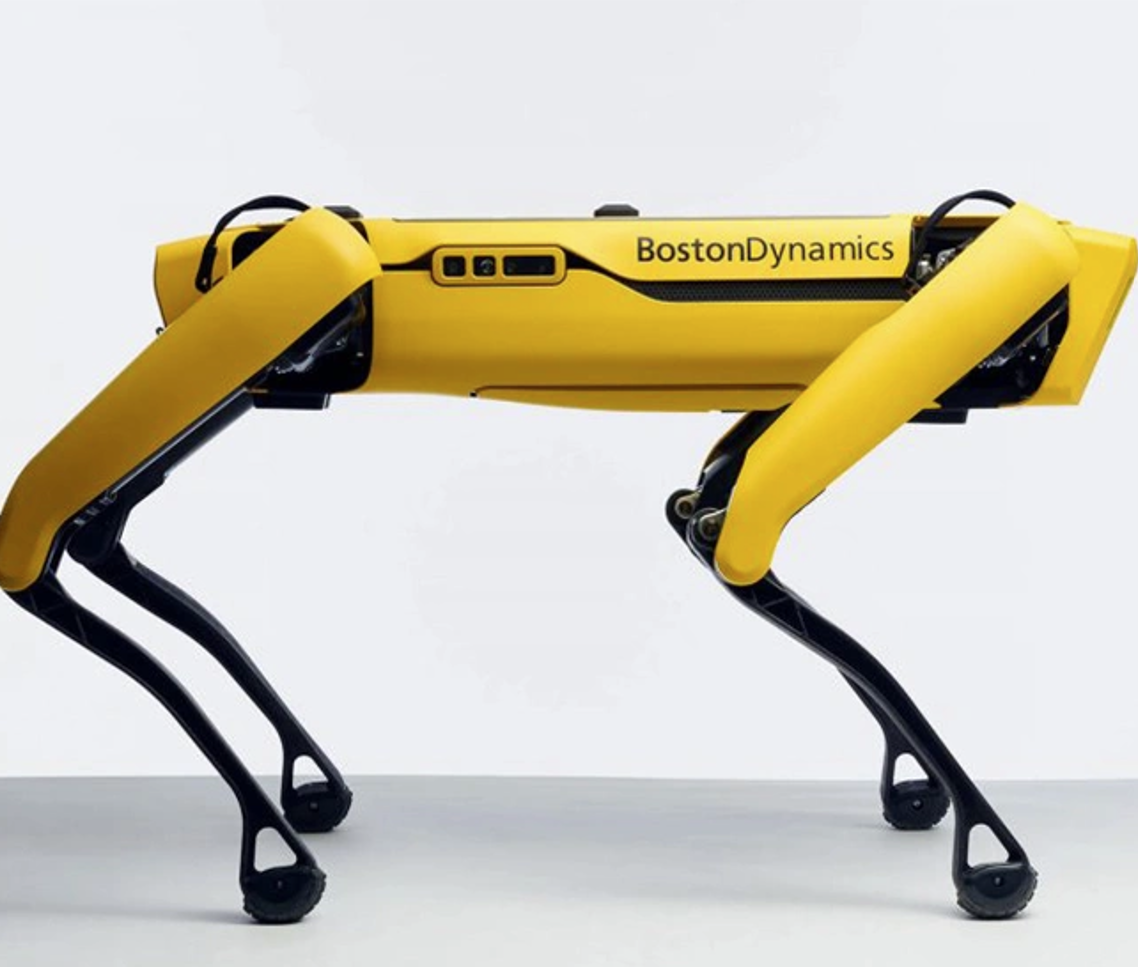
Mining environments are not always the simplest or safest places to operate in. Conditions change constantly, visibility can be poor, terrain is uneven, and some areas carry very obvious safety risks for teams working on the ground.
This is one of the biggest reasons mining robotics have become far more common across modern operations over the last few years.
What started mainly with aerial drone surveys has grown into something much larger in the industry. Mining companies are now using integrated robotic systems across underground environments, open pit operations, stockpile monitoring, inspections, hydrographic surveys, and even hazardous or hard-to-access areas, where sending people regularly is not ideal.
The important part here is that the industry is moving beyond seeing robotics as “just drones”.
Responsible Robotics
Before we dive any deeper, responsible robotics adoption remains important across the mining industry. These technologies are not about replacing people, but rather improving safety, and reduing exposure to potentially hazardous environments across the mining industry.
Underground Mapping & the Need for Better Data
A lot of mining technology sounds impressive in presentations, but underground is usually where you find out pretty quickly whether something is actually useful or not.
Conditions underground are not friendly as we know, GPS disappears almost immediately, visibility changes from area to area, and some sections are just awkward to keep sending survey teams back into over and over again.
Traditional surveying still works, but underground it can become a slow process once teams are moving through long tunnel sections or trying to repeatedly capture updated data across active areas of the mine.
This is where systems from companies like Emesent have started becoming genuinely useful on mining sites. On some underground jobs, survey teams can spend a lot of time simply moving through the area trying to capture updated data properly, especially across larger areas underground.
LiDAR mapping systems make that process far quicker, because teams can move through tunnels, stopes, and declines capturing detailed scans as they go instead of slowly surveying everything section by section the old way.
Aerial Survey Robotics for Large Mining Sites
On the surface side, aerial robotics platforms such as those from Wingtra are increasingly being used for large-scale survey work, volumetric calculations, and high-accuracy mapping across active mining sites.
Fixed-wing VTOL systems are particularly useful on large sites where traditional ground survey coverage would take considerably longer to complete on foot.
Ground Robotics for Inspection and Monitoring
Ground robotics are also starting to play a much bigger role.
Systems developed by Boston Dynamics such as spot, are now being deployed globally for inspection work in areas where terrain, heat, gas exposure, or operational conditions make routine manual inspections more difficult for ground teams.
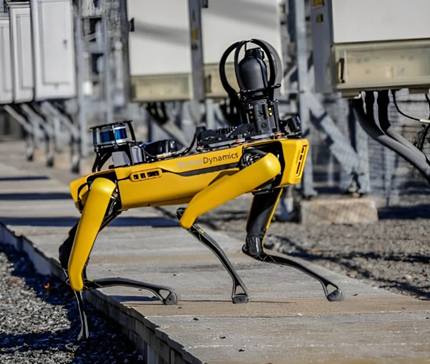
Instead of relying entirely on personnel entering these environments repeatedly, robotic platforms can carry thermal cameras, LiDAR systems, gas sensors, and inspection payloads through operational areas while remotely transmitting data back to site teams.
Hydrographic Robotics and Tailings Storage Facilities
Tailings facilities are a good example of where robotics are starting to make life easier on site.
Normally, if a mine wanted updated depth data from a pond or dam area, survey teams would need to head out on a boat with sonar equipment and manually work their way across the water collecting readings.
In fairness it gets the job done, but it’s not always quick, and on larger areas it can take a decent amount of time to cover everything properly to ensure proper complete data is being sent back.
This is where unmanned surface vehicles have started becoming extremely useful for these types of jobs. Instead of putting teams onto the water every time, the vessel handles the survey remotely while operators stay safely onshore monitoring the job.
The Lumwana Mine Hydrographic Survey Deployment
A recent project at Barrick’s Lumwana Mine in Zambia gives a pretty good idea of how this works in practice.
The site used the Apache 4 Hydrographic Survey Solution to survey for sections of the tailings facility remotely instead of sending actual teams out onto the pond itself with sonar equipment.
On facilities like these, even something like simple survey work can become awkward for teams depending on the water conditions, access around the dam, or how much area needs to be covered.
Repeating that process regularly is where things start becoming time consuming for operators and the survey team themselves.
Using the Apache 4 system, the vessel could move across the pond collecting the bathymetric data while operators stayed onshore monitoring the survey from a safe distance.
The setup combined sonar mapping with RTK positioning and navigation technology from CHCNAV to produce detailed depth maps of the facility during the survey process.
Building Connected Mining Robotics Ecosystems
If your operation is looking at safer inspections, faster site data collection, or more reliable monitoring across underground, surface, or hydrographic environments, robotics are becoming very difficult to ignore.
From autonomous LiDAR mapping and aerial surveying through to robotic inspections and hydrographic sonar systems, modern mining operations are starting to build far more connected ways of understanding what is happening across site in real time.
DWYKA Mining Services works with globally recognised technology partners including Boston Dynamics, Wingtra, Emesent, to help mining operations deploy practical robotics solutions built for real conditions on site.
If you would like more information on mining robotics systems, autonomous surveying solutions, or integrated inspection technologies, reach out to DWYKA Mining Services and speak to the team about the right solution for your operation!